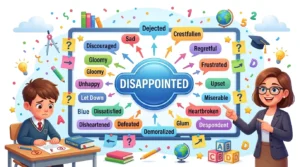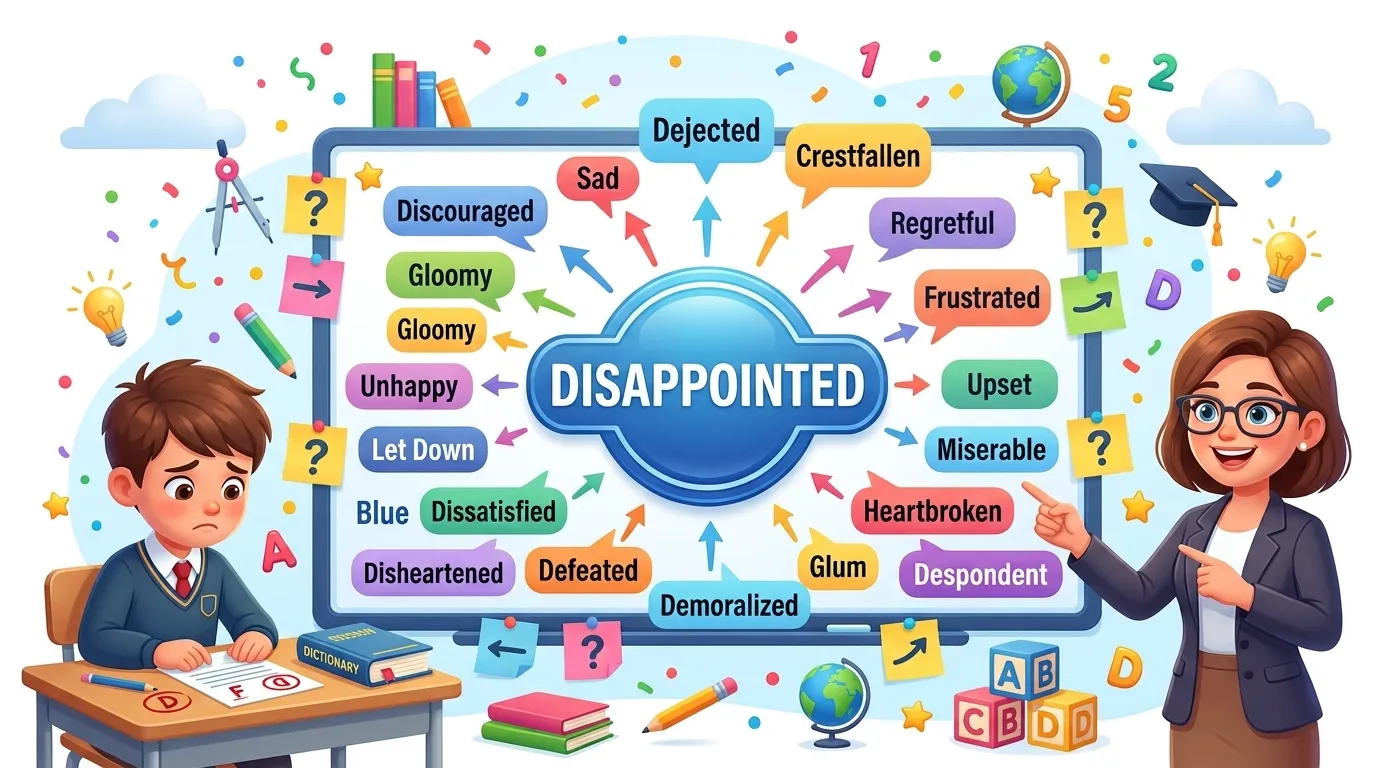
Disappointed means feeling sad because something did not happen as you expected. Imagine a student who studies hard for an exam but gets lower marks than expected. The student feels disappointed because the result is not what they hoped for. This word is common in daily conversations, books, news, and professional writing because everyone experiences unmet expectations at some point.
Learning the synonyms of disappointed helps English learners, students, teachers, and content writers express feelings more accurately. Instead of repeating the same word, you can choose a synonym that better matches the situation.
In this guide, you will learn the meaning of disappointed, its pronunciation, grammar, history, connotation, semantic categories, and 30 useful synonyms with simple meanings and examples.
Meaning of Disappointed
Definition
Disappointed (Adjective): Feeling unhappy because something you hoped for or expected did not happen.
Examples
- Sarah felt disappointed after missing the last bus.
- We were disappointed when the concert was canceled.
Connotative Meaning
(Connotation: The emotional feeling or idea that a word suggests beyond its basic meaning.)
- Positive tone: Rarely positive; sometimes encourages learning or personal growth.
- Negative tone: Most commonly expresses sadness, frustration, or regret.
- Neutral tone: Can simply describe an emotional state without strong judgment.
Etymology
- Source Language: Old French and Latin.
- Original Meaning: From Old French desappointer, meaning “to remove from an appointed position” or “prevent expectations from being fulfilled.”
Short History
- Old English (450–1100): The exact word did not exist, but similar ideas were expressed using native English words for sorrow and failure.
- Middle English (1100–1500): French influence introduced forms related to appoint and disappoint.
- Modern English (1500–Present): Disappointed became widely used to describe emotional sadness caused by unmet expectations.
Pronunciation (US & UK – IPA)
- US: /ˌdɪsəˈpɔɪntɪd/
- UK: /ˌdɪsəˈpɔɪntɪd/
Syllables
dis-ap-point-ed
Affixation Pattern of Disappointed
- Root: appoint
- Prefix: dis-
- Suffix: -ed
Word Formation
- Disappoint (Verb) – to fail to satisfy expectations.
- Disappointed (Adjective) – feeling unhappy after unmet expectations.
- Disappointing (Adjective) – causing disappointment.
- Disappointment (Noun) – the feeling of sadness after unmet expectations.
- Disappointingly (Adverb) – in a disappointing way.
Synonyms of Disappointed with Meanings and Examples
1. Discouraged (Adjective)
US: /dɪˈskɝːɪdʒd/ | UK: /dɪˈskʌrɪdʒd/
Meaning: Feeling less confident or hopeful.
Examples:
- She felt discouraged after failing the interview.
- Don’t become discouraged by one mistake.
2. Dejected (Adjective)
US: /dɪˈdʒektɪd/ | UK: /dɪˈdʒektɪd/
Meaning: Feeling very sad and without hope.
Examples:
- He looked dejected after losing the game.
- The team went home dejected.
3. Crestfallen (Adjective)
US: /ˈkrestˌfɔːlən/ | UK: /ˈkrestˌfɔːlən/
Meaning: Looking very disappointed.
Examples:
- She looked crestfallen after hearing the news.
- His crestfallen face showed his feelings.
4. Let Down (Adjective)
US: /let daʊn/ | UK: /let daʊn/
Meaning: Feeling disappointed because someone failed you.
Examples:
- I felt let down by my friend.
- They were let down by the service.
5. Dissatisfied (Adjective)
US: /dɪsˈsætɪsfaɪd/ | UK: /dɪsˈsætɪsfaɪd/
Meaning: Not pleased with something.
Examples:
- Customers were dissatisfied with the product.
- She remained dissatisfied with the results.
6. Disheartened (Adjective)
US: /dɪsˈhɑːrtənd/ | UK: /dɪsˈhɑːtənd/
Meaning: Losing hope or confidence.
Examples:
- He became disheartened after many failures.
- Don’t feel disheartened by criticism.
7. Downhearted (Adjective)
US: /ˌdaʊnˈhɑːrtɪd/ | UK: /ˌdaʊnˈhɑːtɪd/
Meaning: Feeling unhappy and discouraged.
Examples:
- She felt downhearted all day.
- The news left everyone downhearted.
8. Gloomy (Adjective)
US: /ˈɡluːmi/ | UK: /ˈɡluːmi/
Meaning: Feeling sad or without hope.
Examples:
- He became gloomy after the loss.
- She looked gloomy all morning.
9. Sad (Adjective)
US: /sæd/ | UK: /sæd/
Meaning: Feeling unhappy.
Examples:
- She was sad about the result.
- Everyone felt sad after the event.
10. Unhappy (Adjective)
US: /ʌnˈhæpi/ | UK: /ʌnˈhæpi/
Meaning: Not feeling happy.
Examples:
- He was unhappy with the decision.
- The children looked unhappy.
11. Regretful (Adjective)
US: /rɪˈɡretfəl/ | UK: /rɪˈɡretfəl/
Meaning: Feeling sorry about something.
Examples:
- She felt regretful afterward.
- He gave a regretful smile.
12. Frustrated (Adjective)
US: /ˈfrʌstreɪtɪd/ | UK: /frʌˈstreɪtɪd/
Meaning: Feeling upset because something is difficult.
Examples:
- He became frustrated by delays.
- She sounded frustrated.
13. Upset (Adjective)
US: /ʌpˈset/ | UK: /ʌpˈset/
Meaning: Feeling emotionally disturbed.
Examples:
- She was upset by the news.
- He looked upset all evening.
14. Blue (Adjective)
US: /bluː/ | UK: /bluː/
Meaning: Feeling slightly sad.
Examples:
- I feel blue today.
- She seemed a little blue.
15. Miserable (Adjective)
US: /ˈmɪzərəbəl/ | UK: /ˈmɪzərəbəl/
Meaning: Extremely unhappy.
Examples:
- He felt miserable after losing.
- The rainy weather made everyone miserable.
16. Brokenhearted (Adjective)
US: /ˌbroʊkənˈhɑːrtɪd/ | UK: /ˌbrəʊkənˈhɑːtɪd/
Meaning: Deeply sad because of emotional pain.
Examples:
- She was brokenhearted after the breakup.
- He looked brokenhearted.
17. Defeated (Adjective)
US: /dɪˈfiːtɪd/ | UK: /dɪˈfiːtɪd/
Meaning: Feeling like you have failed.
Examples:
- He felt defeated after many attempts.
- They looked defeated.
18. Demoralized (Adjective)
US: /dɪˈmɔːrəlaɪzd/ | UK: /dɪˈmɒrəlaɪzd/
Meaning: Losing confidence and hope.
Examples:
- Workers felt demoralized.
- She became demoralized.
19. Glum (Adjective)
US: /ɡlʌm/ | UK: /ɡlʌm/
Meaning: Quietly sad.
Examples:
- He looked glum today.
- The children seemed glum.
20. Heavyhearted (Adjective)
US: /ˌheviˈhɑːrtɪd/ | UK: /ˌheviˈhɑːtɪd/
Meaning: Feeling deeply sad.
Examples:
- She left with a heavyhearted feeling.
- He spoke in a heavyhearted voice.
21. Despairing (Adjective)
US: /dɪˈsperɪŋ/ | UK: /dɪˈspeərɪŋ/
Meaning: Feeling without hope.
Examples:
- He became despairing.
- They sounded despairing.
22. Low (Adjective)
US: /loʊ/ | UK: /ləʊ/
Meaning: Feeling emotionally down.
Examples:
- She felt low after the meeting.
- He has been feeling low lately.
23. Melancholy (Adjective)
US: /ˈmelənkɑːli/ | UK: /ˈmelənkəli/
Meaning: Gently sad for a long time.
Examples:
- The song made her melancholy.
- He felt melancholy.
24. Sorrowful (Adjective)
US: /ˈsɔːroʊfəl/ | UK: /ˈsɒrəfəl/
Meaning: Full of sadness.
Examples:
- She had a sorrowful expression.
- His voice sounded sorrowful.
25. Bitter (Adjective)
US: /ˈbɪtər/ | UK: /ˈbɪtə/
Meaning: Angry because of disappointment.
Examples:
- He remained bitter.
- She sounded bitter afterward.
26. Heartbroken (Adjective)
US: /ˈhɑːrtˌbroʊkən/ | UK: /ˈhɑːtˌbrəʊkən/
Meaning: Extremely sad because of loss.
Examples:
- She was heartbroken.
- He felt heartbroken after the news.
27. Dispirited (Adjective)
US: /dɪˈspɪrɪtɪd/ | UK: /dɪˈspɪrɪtɪd/
Meaning: Feeling without energy or hope.
Examples:
- The team became dispirited.
- She looked dispirited.
28. Woeful (Adjective)
US: /ˈwoʊfəl/ | UK: /ˈwəʊfəl/
Meaning: Very unhappy or full of sorrow.
Examples:
- He had a woeful expression.
- She felt woeful.
29. Pained (Adjective)
US: /peɪnd/ | UK: /peɪnd/
Meaning: Showing emotional hurt.
Examples:
- He gave a pained smile.
- She looked pained.
30. Despondent (Adjective)
US: /dɪˈspɑːndənt/ | UK: /dɪˈspɒndənt/
Meaning: Feeling hopeless and sad.
Examples:
- He became despondent after many failures.
- She sounded despondent.
Prototype Meaning
When people hear the word disappointed, they usually imagine someone who expected a good result but received a bad one instead. The feeling is often connected with sadness, frustration, or regret after hopes are not fulfilled.
Prototype Categorization
- Mild disappointment: Sad, Blue, Unhappy, Low
- Strong disappointment: Heartbroken, Brokenhearted, Miserable, Despondent
- Loss of hope: Discouraged, Disheartened, Demoralized, Defeated
- Emotional sadness: Gloomy, Melancholy, Sorrowful, Woeful
- Frustration-related: Frustrated, Dissatisfied, Bitter, Upset
Grouping synonyms into categories helps writers choose the most suitable word for different emotions and situations, making writing clearer and more expressive.
Antonyms of Disappointed
- Satisfied (Adjective): Feeling pleased because expectations were met.
- Happy (Adjective): Feeling joyful and content.
- Delighted (Adjective): Feeling great pleasure.
- Pleased (Adjective): Feeling happy with a result.
- Content (Adjective): Feeling peaceful and satisfied.
- Thrilled (Adjective): Feeling extremely excited and happy.
- Cheerful (Adjective): Feeling bright and positive.
- Optimistic (Adjective): Expecting good things to happen.
- Encouraged (Adjective): Feeling hopeful and confident.
- Fulfilled (Adjective): Feeling completely satisfied.
Short Questions and Answers
- What does disappointed mean?
It means feeling unhappy because something did not happen as expected. - When should disappointed be used?
Use it when hopes, plans, or expectations are not fulfilled. - Is disappointed positive or negative?
It usually has a negative meaning because it expresses sadness or frustration. - How is it different from similar words?
Disappointed focuses on unmet expectations, while words like heartbroken express much deeper emotional pain and frustrated emphasizes difficulty or obstacles.
Conclusion
Learning the meaning of disappointed and the synonyms of disappointed is a simple way to improve your English vocabulary. The synonyms of disappointed, such as discouraged, dejected, disheartened, and crestfallen, help you express different levels of sadness and frustration more accurately. Understanding the pronunciation, grammar, history, and connotation of disappointed also makes your speaking and writing more natural. Instead of repeating the same word, choose the right synonym for each situation. Regular practice will strengthen your vocabulary, improve your writing, and build confidence in English communication.

I’m Daniel Sterling, a passionate vocabulary writer and language enthusiast based in the United States. I specialize in writing simple, helpful, and easy-to-understand content about synonyms, word meanings, grammar, and everyday English communication.
I created this platform to help students, writers, bloggers, and English learners discover better words and improve their writing skills with confidence. I enjoy breaking down complex vocabulary into clear explanations with practical examples that anyone can understand.