Elite means a person or group that is considered the best because of their skills, success, knowledge, or social position. Imagine a student who studies hard every day and wins a national science competition. People may call that student part of the elite group because of outstanding performance. The word is common in education, sports, business, politics, and everyday English.
Learning the synonyms of elite helps English learners, students, teachers, and content writers express ideas in different ways. Using different words also makes writing more interesting and avoids repeating the same vocabulary.
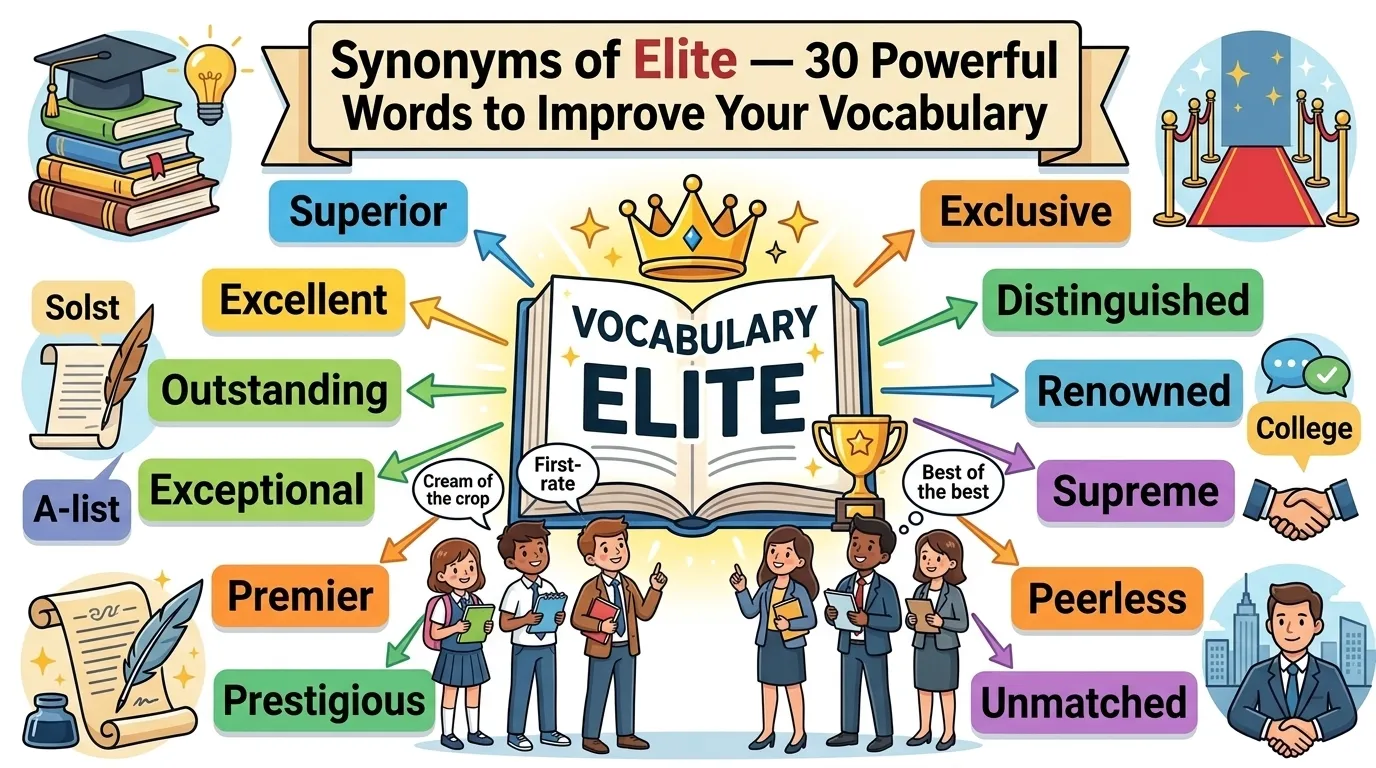
In this article, you will learn the meaning of elite, its pronunciation, grammar, history, connotation, and 30 useful synonyms with simple meanings and examples. You will also discover how these words are used in different situations to improve your English vocabulary.
Meaning of Elite
Definition
Elite (Adjective, Noun)
Definition:
A person, group, or thing that is considered the best, most skilled, most successful, or of the highest quality in a particular field.
Examples
- The university accepts only elite students with excellent grades.
- She trained with an elite team before the championship.
Connotative Meaning
(Connotation: the emotional or cultural feeling that a word suggests beyond its basic dictionary meaning.)
- Positive Tone: Shows excellence, high quality, success, intelligence, or outstanding ability.
- Negative Tone: May suggest pride, privilege, exclusiveness, or being separated from ordinary people.
- Neutral Tone: Simply refers to the highest-ranking or best-performing people or groups.
Etymology
Origin
- Source Language: French
- Original Word: élite
- Original Meaning: “Chosen” or “selected from the best.”
Short History
- Old English (450–1100): The word elite did not exist in Old English.
- Middle English (1100–1500): The concept of selected or noble groups existed, but the word itself was not yet used.
- Modern English (1500–Present): The word entered English from French during the 18th century and became popular for describing the best individuals or groups in society.
Pronunciation (US & UK – IPA)
US
/eɪˈliːt/
UK
/eɪˈliːt/
Syllables
e-lite
Affixation Pattern of Elite
Root
elite
Prefix
None
Suffix
None
Word Formation
- Elite (Noun) – the best people or group.
- Elite (Adjective) – of the highest quality.
- Elitism (Noun) – belief that a select group is superior.
- Elitist (Noun) – a person who supports elitism.
- Elitist (Adjective) – relating to elitism.
- Elitistically (Adverb) – in an elitist manner.
Synonyms of Elite with Meanings and Examples
1. Superior (Adjective)
US: /suːˈpɪriər/ | UK: /suːˈpɪəriə/
Meaning: Better than others in quality, ability, or importance.
Examples:
- The company is known for its superior products.
- She showed superior leadership during the project.
2. Excellent (Adjective)
US: /ˈeksələnt/ | UK: /ˈeksələnt/
Meaning: Extremely good or of very high quality.
Examples:
- He received excellent marks in every subject.
- The restaurant offers excellent customer service.
3. Outstanding (Adjective)
US: /aʊtˈstændɪŋ/ | UK: /aʊtˈstændɪŋ/
Meaning: Clearly better than others because of great quality or achievement.
Examples:
- She gave an outstanding performance.
- His work was outstanding from the beginning.
4. Exceptional (Adjective)
US: /ɪkˈsepʃənəl/ | UK: /ɪkˈsepʃənəl/
Meaning: Much better than usual or unusually impressive.
Examples:
- The athlete has exceptional talent.
- They received exceptional support from the community.
5. Premier (Adjective)
US: /prɪˈmɪr/ | UK: /ˈpremiə/
Meaning: First in importance, quality, or rank.
Examples:
- It is the country’s premier research center.
- She works for a premier fashion brand.
6. First-Class (Adjective)
US: /ˌfɜːrst ˈklæs/ | UK: /ˌfɜːst ˈklɑːs/
Meaning: Of the highest quality or standard.
Examples:
- The hotel provides first-class facilities.
- We enjoyed first-class service throughout the trip.
7. High-Class (Adjective)
US: /ˌhaɪ ˈklæs/ | UK: /ˌhaɪ ˈklɑːs/
Meaning: Elegant, expensive, and of very high quality.
Examples:
- They stayed in a high-class hotel.
- The event attracted many high-class guests.
8. Top-Tier (Adjective)
US: /ˌtɑːp ˈtɪr/ | UK: /ˌtɒp ˈtɪə/
Meaning: Belonging to the highest level or category.
Examples:
- She joined a top-tier university.
- The company hires top-tier engineers.
9. Distinguished (Adjective)
US: /dɪˈstɪŋɡwɪʃt/ | UK: /dɪˈstɪŋɡwɪʃt/
Meaning: Well respected because of achievement or excellence.
Examples:
- He is a distinguished professor.
- The award honored several distinguished scientists.
10. Prestigious (Adjective)
US: /preˈstɪdʒəs/ | UK: /preˈstɪdʒəs/
Meaning: Highly respected and admired because of success or reputation.
Examples:
- She earned a scholarship from a prestigious university.
- Winning the prestigious award changed his career.
Synonyms of Elite (Continued)
11. Exclusive (Adjective)
US: /ɪkˈskluːsɪv/ | UK: /ɪkˈskluːsɪv/
Meaning: Limited to a select group of people or available only to a few.
Examples:
- The club is exclusive and accepts only invited members.
- She attended an exclusive business event.
12. Select (Adjective)
US: /sɪˈlekt/ | UK: /sɪˈlekt/
Meaning: Carefully chosen because of high quality or ability.
Examples:
- Only a select group of students joined the program.
- The museum displayed a select collection of paintings.
13. Choice (Adjective)
US: /tʃɔɪs/ | UK: /tʃɔɪs/
Meaning: Of the finest quality; specially selected.
Examples:
- The chef used choice ingredients.
- They offered choice seats for the concert.
14. Prime (Adjective)
US: /praɪm/ | UK: /praɪm/
Meaning: Of the highest quality or most important.
Examples:
- This area is prime real estate.
- She is in the prime of her career.
15. Finest (Adjective)
US: /ˈfaɪnɪst/ | UK: /ˈfaɪnɪst/
Meaning: The very best in quality or excellence.
Examples:
- The restaurant serves the finest seafood.
- He is one of the finest writers of his generation.
16. Leading (Adjective)
US: /ˈliːdɪŋ/ | UK: /ˈliːdɪŋ/
Meaning: Most important, successful, or influential.
Examples:
- She works for a leading technology company.
- He is a leading expert in medicine.
17. Eminent (Adjective)
US: /ˈemɪnənt/ | UK: /ˈemɪnənt/
Meaning: Famous and respected because of great achievements.
Examples:
- The conference welcomed many eminent scientists.
- An eminent judge delivered the keynote speech.
18. Prominent (Adjective)
US: /ˈprɑːmɪnənt/ | UK: /ˈprɒmɪnənt/
Meaning: Well known and important.
Examples:
- She is a prominent business leader.
- A prominent author visited the school.
19. Renowned (Adjective)
US: /rɪˈnaʊnd/ | UK: /rɪˈnaʊnd/
Meaning: Famous and admired by many people.
Examples:
- The city is renowned for its beautiful gardens.
- He became a renowned artist.
20. Acclaimed (Adjective)
US: /əˈkleɪmd/ | UK: /əˈkleɪmd/
Meaning: Publicly praised for excellence or success.
Examples:
- She is an acclaimed actress.
- The acclaimed novel won several awards.
21. Celebrated (Adjective)
US: /ˈseləbreɪtɪd/ | UK: /ˈseləbreɪtɪd/
Meaning: Widely known and admired for achievements.
Examples:
- The celebrated musician performed live.
- He is a celebrated scientist around the world.
22. Illustrious (Adjective)
US: /ɪˈlʌstriəs/ | UK: /ɪˈlʌstriəs/
Meaning: Highly respected because of remarkable achievements.
Examples:
- She comes from an illustrious family.
- The university has an illustrious history.
23. Noble (Adjective)
US: /ˈnoʊbəl/ | UK: /ˈnəʊbəl/
Meaning: Showing high moral qualities or belonging to a high social rank.
Examples:
- He made a noble decision.
- The story follows a noble family.
24. Exalted (Adjective)
US: /ɪɡˈzɔːltɪd/ | UK: /ɪɡˈzɔːltɪd/
Meaning: Raised to a very high rank, honor, or importance.
Examples:
- She held an exalted position in the organization.
- The leader was exalted by his followers.
25. Supreme (Adjective)
US: /suːˈpriːm/ | UK: /suːˈpriːm/
Meaning: Highest in authority, quality, or importance.
Examples:
- She showed supreme confidence.
- This is the supreme example of teamwork.
26. Paramount (Adjective)
US: /ˈpærəmaʊnt/ | UK: /ˈpærəmaʊnt/
Meaning: More important than anything else.
Examples:
- Safety is of paramount importance.
- Trust is paramount in every relationship.
27. Peerless (Adjective)
US: /ˈpɪrləs/ | UK: /ˈpɪələs/
Meaning: Better than everyone else; without equal.
Examples:
- The athlete displayed peerless skill.
- Her kindness was peerless.
28. Unmatched (Adjective)
US: /ʌnˈmætʃt/ | UK: /ʌnˈmætʃt/
Meaning: Better than any other; impossible to equal.
Examples:
- The company offers unmatched customer support.
- His experience is unmatched in the industry.
29. Unrivaled (Adjective)
US: /ʌnˈraɪvəld/ | UK: /ʌnˈraɪvəld/
Meaning: Having no equal or competitor.
Examples:
- The team’s success is unrivaled.
- She has unrivaled knowledge of the subject.
30. Best (Adjective)
US: /best/ | UK: /best/
Meaning: Better than all others in quality or performance.
Examples:
- She always gives her best effort.
- This is the best solution for the problem.
Prototype Categorization
Choosing the right synonym depends on the situation. Grouping synonyms into categories helps writers, students, and English learners select the most accurate word for formal writing, conversations, or creative content.
- High Quality and Excellence: Superior, Excellent, Outstanding, Exceptional, Finest, First-Class, Top-Tier
- Status and Reputation: Prestigious, Distinguished, Eminent, Prominent, Renowned, Celebrated, Illustrious
- Leadership and Importance: Premier, Leading, Paramount, Supreme, Prime
- Exclusiveness and Selection: Exclusive, Select, Choice, High-Class
- Uniqueness and Superiority: Peerless, Unmatched, Unrivaled, Best
- Honor and Respect: Noble, Exalted
These categories make it easier to choose the best synonym based on meaning, tone, and context instead of using the same word repeatedly.
Antonyms of Elite
- Ordinary (Adjective): Common and not special.
- Average (Adjective): Typical or normal in quality.
- Common (Adjective): Frequently found and not rare.
- Inferior (Adjective): Lower in quality or ability.
- Mediocre (Adjective): Only average and not impressive.
- Standard (Adjective): Normal or usual in quality.
- Typical (Adjective): Showing the usual features of something.
- Regular (Adjective): Normal and not exceptional.
- Unremarkable (Adjective): Not interesting or outstanding.
- Second-Rate (Adjective): Not of the highest quality.
Short Questions and Answers
- What does elite mean?
Answer: Elite means the best people, groups, or things because of their high quality, skill, success, or importance. - When should elite be used?
Answer: Use elite when talking about outstanding people, top organizations, excellent teams, high-quality products, or the highest level of performance. - Is elite positive or negative?
Answer: It is usually positive because it describes excellence and success. However, it can have a negative meaning when it suggests unfair privilege, exclusiveness, or arrogance. - How is elite different from similar words?
Answer: Elite describes the very best group or individuals. Words like excellent describe quality, prestigious highlights reputation, exclusive focuses on limited access, while peerless means having no equal.
Conclusion
Learning the meaning of elite and exploring the Synonyms of Elite can greatly improve your English vocabulary and communication skills. Instead of using the same word again and again, you can choose powerful alternatives like superior, excellent, outstanding, exceptional, prestigious, and distinguished to express ideas more clearly. The Synonyms of Elite guide will help you discover words that make your writing more professional, engaging, and effective. Regular practice of these elite-related words in reading, speaking, and writing will help you become a more fluent and confident English user.

I am Ethan Calloway, a content writer and English language enthusiast based in the United States. I specialize in creating simple and clear articles that help readers improve their vocabulary, grammar, and writing skills. My main focus is on synonyms, word meanings, and practical English usage that students, bloggers, and content creators can easily understand and apply in real life.